Understanding Risk Tolerance in Investing
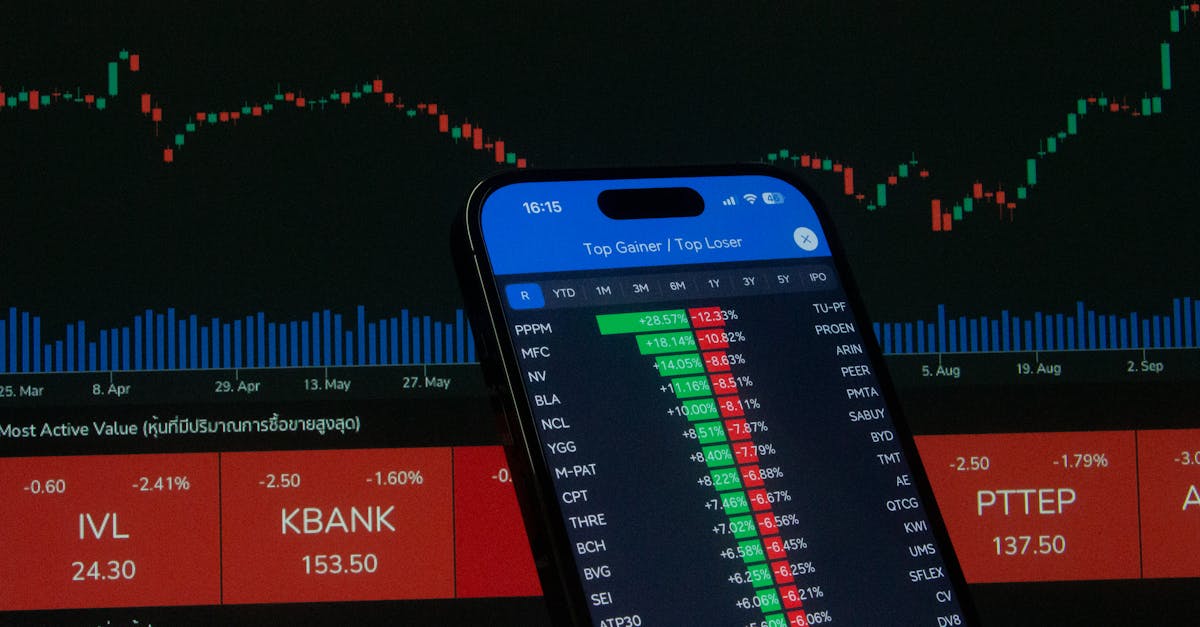
Understanding your risk tolerance is the single most important decision you'll make as an investor. It's not about picking individual stocks or timing the market — it's about choosing an investment approach you can actually stick with through downturns. If you understand your risk tolerance, you know how much volatility you can psychologically handle, how long your time horizon is, and what asset allocation will let you sleep at night. This guide walks you through assessing your own risk profile and building a portfolio that matches it.
What Is Risk Tolerance?
Risk tolerance is your ability and willingness to sit through market downturns without panic-selling your investments. It's partly emotional (how much seeing your balance drop bothers you?) and partly practical (when do you actually need the money?).
There's no "right" level of risk tolerance. A 25-year-old with 40 years to retirement can afford more volatility than a 60-year-old in their final working decade. Someone buying a house in two years cannot afford the same equity exposure as someone saving for retirement in 30 years. And someone who sleeps well at night with stocks dropping 20% has higher risk tolerance than someone who checks their balance every day and feels anxious.
Three broad investor profiles:
Conservative: You prioritise capital preservation over growth. You're uncomfortable with seeing your balance drop 10–15% in a bad year. You might be close to retirement, saving for a house within 5 years, or you've lived through a market crash and learned your limits.
Moderate: You accept meaningful volatility in exchange for better long-term returns. You can sit through a 20–25% drop without panicking. You have 10–20 years until you need the money. Most working-age investors with decent savings horizons end up here.
Aggressive: You're comfortable with significant short-term volatility because you have decades until retirement. A 30–40% drop doesn't make you sell. You won't need this money for 20+ years and you believe in staying invested through every cycle.
These aren't personality types—they're practical categories based on time horizon and emotional comfort. You'll move between them as your life changes.
Assessing Your Personal Risk Tolerance
Ask yourself three questions.
1. When do you actually need this money?
This is the biggest driver of your risk tolerance. Money you need within 2 years should not be in equities—keep it in cash or short-term bonds. Money you need in 5–10 years can handle moderate equity exposure (50–70% stocks). Money you won't touch for 20+ years can go 80–100% equities if you're comfortable with the volatility.
Time in the market beats timing the market. Imagine you invested £200 a month at 7% real return. Over 30 years, you'd have £243,000—you contributed £72,000, the rest came from compounding. But if you'd started just 10 years earlier with the same monthly amount, you'd have £358,000. That's 47% more wealth from just five extra years of compounding. Young investors with patience have a structural advantage: time magnifies your contributions.
2. How would you feel watching your balance drop 20–30%?
This is the emotional test. Global equities have dropped 20–40% at least once in every decade-long stretch. In 2008, they fell nearly 50%. If seeing that makes you want to sell, you're too aggressive. If you'd hold steady knowing downturns are temporary, you can tolerate higher equity exposure. If you'd feel sick but wouldn't sell, you're probably moderate.
3. Do you have financial safety nets?
If you have a stable job, an emergency fund, and pension contributions happening automatically, you can afford to take more investment risk because losing some of your savings won't derail your life. If you're self-employed, recently redundant, or have dependents relying solely on your income, you need more financial cushion before you can afford aggressive investing.
Asset Classes and Their Risk-Return Trade-Off
Every investment trades risk for expected return. Here's what history shows us:
| Asset class | Typical annual return | Volatility | Time horizon |
|---|---|---|---|
| Cash savings | 3–5% | Very low | 0–2 years |
| Government bonds | 4–5% | Low | 2–5 years |
| Corporate bonds | 5–7% | Medium | 5–10 years |
| Global equities | 7–10% | High | 10+ years |
| UK property | 5–8% | Medium-high | 10+ years |
These are long-term averages. In any single year, equities can drop 20–40% or gain 20–30%. Bonds are smoother but lower-returning. Cash is stable but barely keeps pace with inflation.
Diversification works because different assets move at different times. When global equities dropped 48% in 2008, government bonds actually gained value—panicked investors fled to safety, pushing yields down and bond prices up. A 60/40 stock-bond portfolio would have dropped roughly 30%, painful but half the equity-only loss. This is why building a mix of asset classes historically delivers better risk-adjusted returns than any single asset alone.
Use the compound interest calculator to model long-term returns at different asset allocations and contribution levels.
Building a Portfolio for Your Risk Level
Translate your risk tolerance into actual portfolio construction.
Conservative (0–50% equities): Example: 30% global equities, 50% bonds, 20% cash. Good for those within 5–10 years of a major goal (house purchase, retirement), or anyone uncomfortable with volatility. Your main risk is inflation eroding your savings, not market crashes. This allocation is low enough that you can hold steady through downturns.
Moderate (50–70% equities): Example: 60% global equities, 30% bonds, 10% cash. Good for working-age investors with 15–25 years to retirement, a decent emergency fund, and stable income. You get meaningful growth (most wealth-building comes from equities) while bonds buffer against crashes. This mix has historically delivered 5–7% real returns with manageable volatility. This is where most people should start, then adjust from there.
Aggressive (80–100% equities): Example: 85% global equities (including some small-cap), 15% bonds or alternatives. Good for young investors with 25+ years to retirement, those who can stomach a 40% drop, and people who won't sell in a panic. You're betting decades of compounding will more than offset inevitable downturns. This has historically been the highest-returning approach, but you must have the temperament to hold through crashes.
Don't overthink it. A simple three-fund portfolio—global equities, bonds, and cash—in whatever ratio matches your risk tolerance, regularly rebalanced, will outperform 90% of investors chasing individual stocks or tactical timing. If you're just starting out, begin with even small amounts—consistency matters more than size.
Tax-Efficient Investing Matters Too
Where you hold your investments can matter as much as what you invest in. Same portfolio, different tax wrapper, dramatically different long-term wealth.
ISAs (Individual Savings Accounts): You can contribute £20,000 per tax year into an ISA. All growth and income inside an ISA is completely tax-free—forever. If you're not maxing your ISA before investing elsewhere, you're leaving free money on the table. Your allowance resets each April. Even if you only contribute £200 a month, you're saving thousands in tax over 30 years compared to a taxable investment account.
Pensions: Contributions get tax relief—20% from the government automatically, up to 45% if you're a higher-rate taxpayer. Money is locked until age 57 (rising to 58 in 2028), but 25% can be withdrawn tax-free at retirement. For long-term retirement saving, pensions are mathematically hard to beat: you get an instant boost from tax relief plus decades of tax-free growth. Your pension should probably be your main investment vehicle if you're building long-term wealth.
Taxable investments: Capital gains tax (10–20%) and dividend tax apply here. Growth is slower. Only invest here once you've maxed your ISA and pension. Bond and equity funds both work inside tax wrappers, so always prioritise maxing the wrapper first.
Getting Started
The best time to start investing was 20 years ago. The second best time is today.
Pick an asset allocation matching your risk tolerance using the profiles above, then invest consistently. Even £50 a month compounds meaningfully over 30 years—that's roughly £18,000 contributed, growing to £43,000 at 7% real return. If you're starting with a lump sum, use dollar-cost averaging to reduce the risk of buying right before a crash—invest the lump sum over several months instead of all at once.
Open an ISA first (or max it out if you have one), then use a pension. Keep costs low: an index fund charging 0.2% a year delivers 2–3% more wealth over 30 years than one charging 1%, and that difference compounds.
Frequently Asked Questions
Q: Can I change my risk tolerance over time?
A: Absolutely. As you age, move closer to retirement, or life circumstances change, your risk tolerance shifts. Someone aggressive at 30 might reasonably move to moderate at 50 and conservative at 65. The key is adjusting your asset allocation to match, not panic-selling in a crash. Review your allocation every few years and rebalance if needed.
Q: What if I'm in a pension scheme and don't know what it's invested in?
A: Check your statements or log into your pension provider's website. Most workplace pensions offer a default fund (often moderate, 60/40 stocks/bonds) and other options. If the default doesn't match your risk tolerance—too aggressive if you're close to retirement, too conservative if you're young—switch it. You can usually change funds online yourself, and it's free.
Q: Is a higher interest rate environment good or bad for investors?
A: It's complicated. Higher rates are bad for existing bond prices (they fall when yields rise), but good for new savers earning interest and for future bond purchases (you lock in higher yields). Higher rates also dampen equity valuations because companies' future profits are worth less when discounted at higher rates. The net effect depends on your portfolio split and how long you hold.
Q: Should I time my investments around market cycles?
A: No. Investors trying to time the market typically underperform by 1–2% a year because they miss the best days, which often follow the worst days. If you're out of the market avoiding a crash, you'll usually miss the recovery. Instead, invest consistently—monthly or quarterly—regardless of market conditions. This is dollar-cost averaging, and it removes emotion from investing.
Q: What's a "good" return on my investments?
A: It depends on your asset allocation and time horizon. Global equities historically average 7–10% a year (including dividends). A 50/50 stock-bond mix expects 5–7%. Heavy cash positions expect 3–5%. Anything close to these long-term averages is fine. Chasing much higher returns usually means taking uncompensated risk or paying high fees. Learn more about what constitutes a reasonable return.
Q: Do I need to understand individual stocks to be a good investor?
A: No. Most professional stock pickers underperform low-cost index funds over 10+ years. A simple three-fund portfolio—global equities, bonds, and cash—beats most people who spend hours researching individual stocks. Your time is better spent automating contributions and rebalancing once a year than obsessing over individual picks.