How to Calculate the Real Return on Your Investments
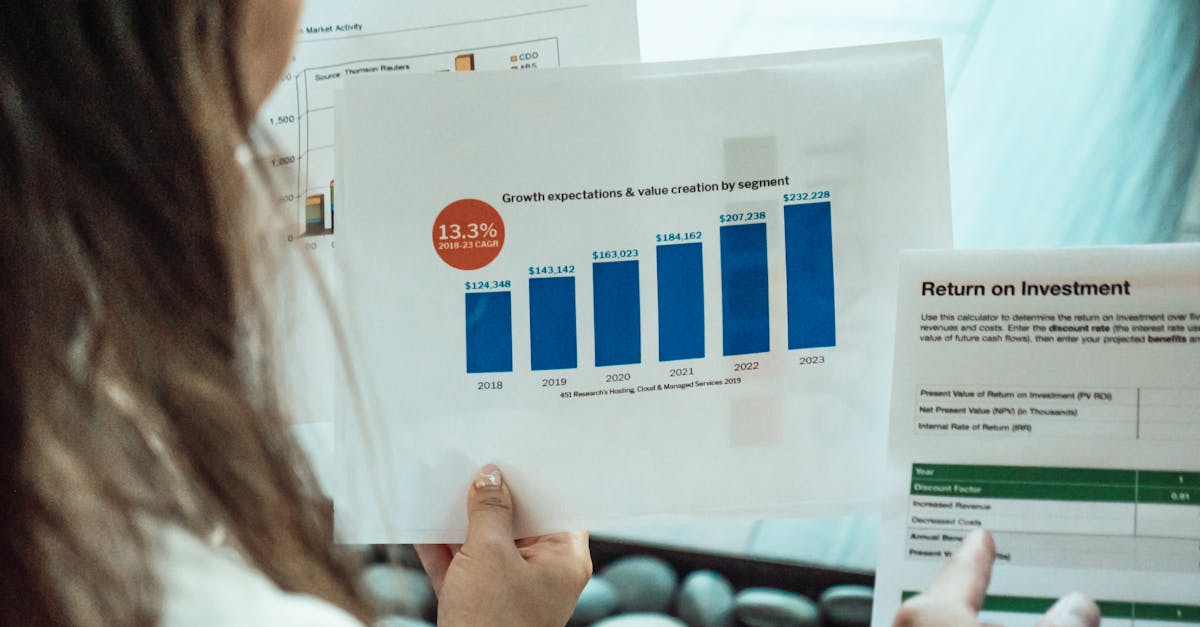
To build real wealth, you need to calculate the real return on your investments — not just look at the percentage your portfolio grew. That 8% annual return looks impressive until you remember that inflation eroded 4% of it, and fees took another 1%. You were left with just 3% real growth. This is why understanding the difference between nominal return (what your statement shows) and real return (what actually matters for your purchasing power) is fundamental to investing.
This guide walks you through calculating real return, why it's the metric that counts, and how to structure your portfolio around it.
What Is Real Return? The Difference That Matters
Nominal return is the headline number: your £10,000 grew to £10,800 in a year. That's 8%.
Real return is what you can actually buy with that money. If inflation ran at 4% that year, your purchasing power only grew by about 4%, not 8%. The extra 4% just kept up with rising prices.
The formula is straightforward:
Real return (%) = ((1 + Nominal return) ÷ (1 + Inflation rate)) − 1
Here's a worked example:
- Your portfolio returns 7% in a year
- Inflation runs at 3%
- Real return = ((1.07) ÷ (1.03)) − 1 = 0.0388, or 3.88%
You grew your actual purchasing power by 3.88%, not 7%. That's the number that matters for retirement planning, wealth building, and understanding whether you're genuinely getting wealthier.
Why Inflation Eats Returns: The Silent Tax
Most people focus on the interest rate or the fund's performance. They miss the silent tax — inflation.
Over the last decade in the UK, inflation has swung from 1% (2016–2020) to over 11% (2022). Those low-return years? If you were earning 2% in a savings account while inflation hit 4%, you lost 2% of your purchasing power each year. That's not a market failure; that's your real return going negative.
Consider this scenario: you inherit £100,000 and decide to keep it safe in a cash savings account earning 4% interest. Sounds reasonable, right?
- If inflation averages 3% over 20 years, your real return is 1%
- Your £100,000 grows to £122,000 nominally
- But it's only worth what £102,000 would have bought you today
- You've lost 18% of your actual purchasing power
Now compare that to a mixed portfolio (60% equities, 40% bonds):
- Historical long-term return: 6.5%
- Same 3% inflation
- Real return: 3.4%
- Your £100,000 grows to £186,000 nominally
- Adjusted for inflation, that's roughly £161,000 in today's money
- You've grown your real wealth by 61%
The difference between ignoring inflation and accounting for it is the difference between a comfortable retirement and financial stress.
How to Calculate Your Real Return: Step by Step
If you've held an investment for a year or more, here's how to measure your real return properly:
Step 1: Find your nominal return. Total value (end of period) minus total value (start of period), divided by starting value. Include any reinvested dividends or interest.
Example: You started with £10,000, ended with £10,700, and received £200 in dividends (reinvested). Your nominal return is (£10,700 − £10,000) ÷ £10,000 = 7%.
Step 2: Find the inflation rate for that period. Use the ONS Consumer Price Index (CPI) for the UK. Search by the dates you held the investment and look up the year-on-year change.
Step 3: Apply the formula. Real return = ((1 + 0.07) ÷ (1 + inflation rate)) − 1
If CPI was 3% that year: ((1.07) ÷ (1.03)) − 1 = 3.88%.
Step 4: Repeat for multiple years (optional but recommended). If you've held the investment for 5+ years, calculate the real return for each year and average them. This smooths out single-year volatility and gives you a truer picture of what the investment actually delivered.
Use our investment calculator to plug in these numbers and visualize how real return compounds over decades. That's where the magic happens.
The Return Erosion Triangle: Inflation, Fees, and Taxes
Three forces eat into your nominal return before it becomes real return:
Inflation is the biggest culprit. A 1% inflation rate compounds just like investment returns do. Over 30 years at 2% inflation, your purchasing power shrinks by 45%. At 4% inflation, it shrinks by 69%.
Fees are the second. An actively managed fund charging 1.5% per year removes 15–20% of returns over 30 years if you'd otherwise earn 7% annually. Passive index funds (0.1–0.3% fees) let almost all your return compound.
Taxes are the third. If you hold investments outside an ISA, you pay:
- Capital gains tax (20%) on profits over £3,000/year
- Income tax (20–45%) on dividends over £500/year
A quick example of the combined impact:
- Nominal return: 7%
- Minus inflation (3%): 4% real
- Minus fees (0.5%): 3.5% real
- Minus tax (assuming 15% effective rate): 3% real
That 7% headline return became a 3% real, after-tax return. This is why tax-efficient holding (ISAs and pensions) and low-fee investing are not optional luxuries — they're core to real wealth building.
Building a Portfolio Optimized for Real Return
Now that you know what real return is, here's how to chase it:
1. Max out your ISA (£20,000/year, UK). All gains, dividends, and interest are completely tax-free. If you don't max it, you're paying unnecessary tax on growth that a tax wrapper could have protected.
2. Invest for the long term in growth assets. Real return compounds more aggressively in equities than bonds or cash. Over 20+ years, a 60/40 (equities/bonds) or 70/30 split has historically beaten cash or bonds alone. But time horizon matters — if you need the money in 2 years, capital preservation takes priority.
3. Use diversification to smooth volatility. Rebalancing your portfolio once a year removes the emotional pressure to panic-sell when equities drop. It also locks in the real returns you've earned.
4. Keep fees low. Every 1% of fees you save is a 1% real return boost, compounded annually. Compare investment platforms on fee structure, not just marketing.
5. Adjust your retirement goals upward. If you want the purchasing power that £1 million has today, 30 years from now you'll need roughly £2.4 million nominally (assuming 3% average inflation). It's easy to set a savings target that doesn't account for inflation — then wake up at retirement underfunded. Calculate your retirement number with real return in mind, and see how inflation affects retirement savings for concrete scenarios.
Frequently Asked Questions
Q: Does real return account for taxes? No, real return is purely inflation-adjusted. It strips out inflation but not taxes or fees. When you're planning, calculate your after-tax, after-fee real return — that's the number that counts for wealth building.
Q: Is 3% real return good? Over 30+ years, yes. Long-term government bonds average 2–3% real return; equities average 4–6%. If you're earning a 3% real return from a diversified portfolio with low fees, you're doing better than most. See what is a good return for more context.
Q: How do I calculate real return if I make regular contributions? It's more complex because you're dollar-cost averaging in at different price points. Use our investment calculator, which handles this automatically. Alternatively, use a spreadsheet with the IRR (internal rate of return) function and then adjust for inflation.
Q: Should I chase higher nominal returns or focus on real return? Focus on real return. A 10% nominal return in a high-inflation year (5%+) is less valuable than a 7% nominal return in low-inflation years. Real return also forces you to account for fees and taxes, which most investors ignore until they're shocked by the results.
Q: What's a realistic real return for my portfolio? If you're 70% equities / 30% bonds: expect 4–5% real return over 20+ years. If you're 50/50: expect 3–4%. If you're mostly cash: expect 1–2%. These are long-term averages — expect 20–30% swings in individual years.
Q: Can inflation go negative? What's a real return then? Yes, deflation happens (prices fall). Japan experienced it in the 1990s–2010s. When inflation is negative, the real return formula still works — you just get a higher real return because you're not being eroded. But nominal returns were also lower, so the boost is usually modest.
Q: How often should I recalculate my real return? Annually is ideal. Quarterly is overkill (noise); less often and you miss drift. Set a reminder each January to look back at the year and calculate what you actually earned in real terms. You might be surprised.